How to Control Pond Algae
Why pond algae blooms, the difference between green water and string algae, and the balanced fix using plants, UV, barley, shade, and smarter feeding to keep koi pond water clear.
Pond algae thrives on two things: sunlight and nutrients. Cut off either one and algae loses its grip. The lasting fix is never a single bottle. It is a balanced pond, plenty of plants to outcompete algae for nutrients, shade to limit light, a UV clarifier for green water, sensible feeding, and removing waste before it rots. Chemicals can knock algae back fast, but unless you fix what feeds it, the bloom always returns.
Tools for Winning the Algae Battle
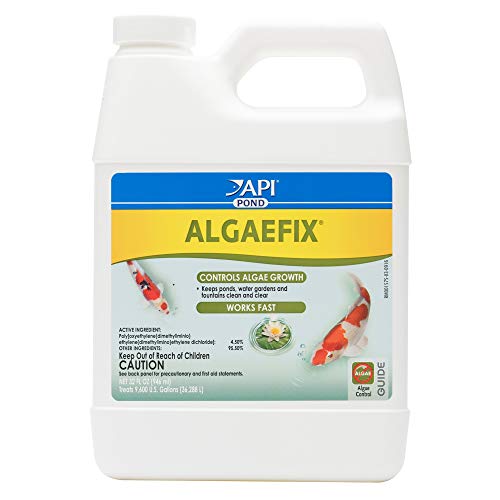
Copper-free, koi-safe algaecide that knocks back green water and string algae fast.

Pond Logic UltraUV Clarifier, 13 Watt
EPA-registered UV clarifier that destroys single-celled algae for clear, green-free water.

Aquascape Beneficial Bacteria (Liquid)
Outcompetes algae for nutrients and clumps fine debris so it settles out.

CrystalClear Algae D-Solv Algae Control
Fast-acting, copper-free algaecide for green water, string, and blanketweed.
First, identify which algae you have
You cannot fix pond algae until you know which type you are fighting, because the two main kinds respond to completely different treatments.
Green water (single-celled suspended algae)
Green water is a bloom of microscopic, free-floating algae. The water turns cloudy green, sometimes pea-soup thick, and you lose sight of your fish even though the water may be perfectly healthy for them. Because this algae floats freely, it passes through a UV clarifier, which is the reliable cure. We cover this case in depth in how to fix green pond water.
String algae (blanketweed)
String algae, or blanketweed, grows in long green filaments that cling to rocks, waterfalls, plant pots, and netting. The water can stay crystal clear while the algae forms thick mats. Because it grows attached to surfaces and never flows through a UV unit, UV does nothing to it. String algae needs manual removal, balance, and patience, covered fully in how to get rid of string algae.
| Symptom | Likely type | Best response |
|---|---|---|
| Whole pond is cloudy green | Green water | UV clarifier plus nutrient control |
| Clear water, green hair on rocks | String algae | Manual removal, barley, bacteria, balance |
| Both at once | Mixed bloom | UV for the water, manual work on the strands |
Attack the root causes, not just the symptoms
Every algae problem traces back to too much light, too many nutrients, or both. The keepers who win against algae fix the inputs.
1. Reduce the nutrients
Nitrate and phosphate are algae fertilizer, and they come from fish waste, uneaten food, fallen leaves, and decaying plant matter. Tackle them directly:
- Feed less. Overfeeding is the single biggest nutrient source in most ponds. Feed only what your koi finish in a couple of minutes, and skip feeding in cold water when fish barely digest.
- Do not overstock. Koi are heavy-waste fish. More fish means more nutrients. Keeping to roughly 1,000 gallons or more per small group keeps the load manageable.
- Remove debris. Net out leaves, vacuum sludge from the bottom, and clean your skimmer basket. Rotting organics feed algae for months.
- Run partial water changes. Swapping 10 to 20 percent of the water weekly exports nitrate. Always dechlorinate the new water.
- Use beneficial bacteria. A strong bacterial colony competes with algae for the same nutrients and helps break down sludge.
2. Reduce the light
Algae is a plant and lives on light. Shade slows it dramatically:
- Add floating plants. Water lilies, water hyacinth, and lettuce shade the surface and absorb nutrients at the same time. Aim for 40 to 60 percent surface coverage.
- Position for some shade. A pond baking in full sun all day is an algae magnet. Strategic shade from plantings or structures helps, within reason.
- Consider a pond dye. Tinting the water lightly limits how deep sunlight penetrates, slowing submerged algae.
3. Add competition with plants
Plants and algae fight over the exact same nutrients, and a well-planted pond simply starves algae out. Marginal plants, submerged oxygenators, and especially a bog or planted filter act as living nutrient sponges. Many heavily planted ponds run clear all season with little or no chemical help. This is the most sustainable algae control there is.
When to use UV and when not to
A UV clarifier is the right tool for green water and the wrong tool for string algae. Inside the unit, ultraviolet light damages the cells of single-celled algae as the water flows past, so the algae dies and clumps out. It needs a properly sized pump pushing water through at the right flow rate, and the bulb is consumable, losing strength after about a season of use even if it still glows. Size it at roughly 10 watts per 1,000 gallons. Get your exact wattage with the UV clarifier calculator, which matches the unit to your real volume.
UV does not harm beneficial bacteria in your biofilter, because those bacteria live on surfaces and do not flow through the chamber in any meaningful number. So you can run UV for green water while your nitrogen cycle keeps working normally.
Where algaecide fits
Copper-free, EPA-registered pond algaecides are koi-safe when dosed to your real volume and used as directed. They knock algae back quickly, which is useful for a heavy bloom or stubborn string algae. Two cautions matter:
- Aerate hard during and after treatment. Dying algae consumes oxygen as it decomposes, and in a warm, stocked pond that can starve fish. Keep the waterfall and air pump running.
- Treat it as a knockdown, not a lifestyle. If you are dosing algaecide every few weeks, the real problem is unaddressed nutrients and light. Fix those and the chemical becomes a rare backup.
The balanced-pond checklist
- Plants covering 40 to 60 percent of the surface
- Feeding only what koi finish in minutes, less in cold water
- Conservative stocking, never overcrowded
- Debris and sludge removed regularly
- Weekly partial water changes with dechlorinated water
- A correctly sized UV clarifier if green water is the issue
- Beneficial bacteria dosed through the warm season
- Barley straw added early as a gentle preventative
Algae is not a sign of failure, it is a sign that light and nutrients are out of balance. Restore the balance and clear water follows naturally. Start by pinning down which algae you have, then work the inputs. For the specific cases, read fixing green pond water and getting rid of string algae, and keep your overall water steady with summer pond care.
Pond Build & Maintenance Planner
Build planner, stocking planner, water-test log, and seasonal maintenance schedule, in one printable planner that keeps your pond healthy year-round.
Frequently Asked Questions
What causes algae in a pond?
Algae needs two things to bloom: light and nutrients. Full sun fuels growth, while excess nitrate and phosphate from fish waste, overfeeding, decaying debris, and runoff feed it. A new or sparsely planted pond with few competing plants gives algae an open buffet. Control algae by attacking the inputs, more shade and plants, less feeding and waste, rather than relying only on chemicals.
What is the difference between green water and string algae?
Green water is caused by microscopic single-celled algae suspended in the water, turning the whole pond pea-soup green so you cannot see your fish. String algae, also called blanketweed, is filamentous algae that grows in long hair-like strands clinging to rocks, waterfalls, and plants. They are different organisms and need different fixes: a UV clarifier kills green water but does not touch string algae.
Does a UV clarifier kill all algae?
No. A UV clarifier only kills the free-floating single-celled algae that cause green water, because that algae passes through the UV chamber where the light damages its cells. String algae and blanketweed grow attached to surfaces and never flow through the unit, so UV does nothing to them. Size UV at roughly 10 watts per 1,000 gallons and use it specifically for green water.
Will more pond plants reduce algae?
Yes, and it is one of the most effective long-term fixes. Plants compete with algae for the same nitrate and phosphate, and floating plants like water lilies also shade the water. Aim to cover 40 to 60 percent of the surface with plants. A vigorous bog or planted filter starves algae of nutrients so effectively that many heavily planted ponds stay clear with no chemicals at all.
Is algaecide safe for koi?
Copper-free, EPA-registered pond algaecides are safe for koi and plants when dosed to your real pond volume and used as directed. Always aerate well during treatment, because dying algae consumes oxygen as it breaks down and can suffocate fish in a warm, crowded pond. Treat algaecide as a short-term knockdown while you fix the root causes, not as a permanent monthly habit.
Does barley straw really work on algae?
Barley straw is a slow, gentle preventative rather than a cure. As it decomposes it releases compounds that appear to inhibit new algae growth, especially string algae, but it works best applied early in the season before a bloom takes hold and takes several weeks to act. It will not clear an existing green water bloom. Think of it as one helpful piece of a balanced, low-algae pond.
Planning or running a pond?
Use our free calculators and guides to get every number right.
Pond Planner: $39