Stop Herons Eating Your Koi
Herons are the top koi predator. Netting is the most reliable defense, backed by decoys, motion sprinklers, deep water, fish caves, and steep pond edges. Here is what genuinely works and what does not.
If koi are vanishing overnight or you spot a tall grey bird standing at the water's edge at dawn, a heron is almost certainly hunting your pond. The single most reliable defense is physical netting, because a heron cannot reach fish it cannot touch. Everything else, including decoys, motion sprinklers, tripwires, deep water, and fish caves, helps reduce the odds, but a hungry heron is patient and clever, so the honest answer is that layering several methods beats trusting any one of them. Below is what actually works, ranked roughly by how dependable it is.
Heron Defenses That Work
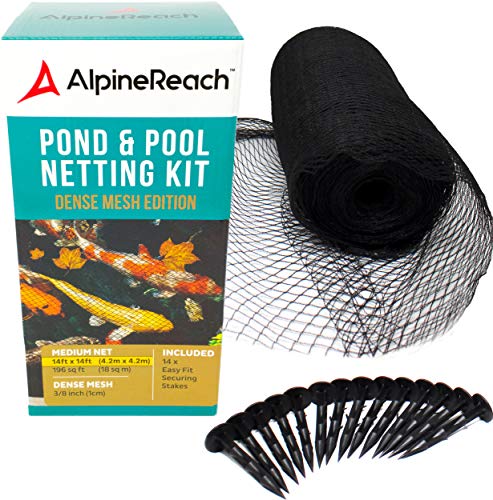
AlpineReach Koi Pond Netting Kit (14 x 14 ft)
Heavy-duty woven mesh with stakes, the most reliable barrier against herons, raccoons, and cats.

Alloxity Pond Netting with 12 Stakes (7 x 10 ft)
Smaller net cover for compact ponds, protects fish from leaves and predators.

Pond H2o Blue Heron Decoy (30 in, with stake)
Life-size decoy to deter casual herons; move it often so birds do not learn it is fake.

Orbit Yard Enforcer Motion-Activated Sprinkler
Startles herons with a sudden burst of water and motion when they approach the pond.
Why herons are so hard to stop
Great blue herons and their relatives are large, intelligent, persistent wading birds that hunt fish for a living. They typically arrive at dawn or dusk, stand statue-still at the shallow edge, and strike with a fast jab of the beak. They have huge home ranges, so even if you scare one off, another can find your pond. And in the United States they are protected under the Migratory Bird Treaty Act, which means trapping or harming them is illegal. Your entire strategy has to be about exclusion and deterrence, making your pond too difficult or unpleasant to hunt.
The defenses, ranked by reliability
1. Netting (the gold standard)
A net stretched over the pond, or a netted frame raised above the water, is the most dependable solution by a wide margin. A heron physically cannot reach fish through a taut net. For looks, many keepers build a low frame so the net sits above the surface rather than resting on it, which is tidier and keeps fish from getting tangled. The downside is appearance and the chore of removing leaves, but if you are losing fish, netting ends the problem fast.
2. Deep water and steep edges
Herons hunt by wading, and they cannot wade in deep water. A pond with steep sides and a deep central zone of 2 to 3 feet or more denies the bird the shallow margin it needs to stand and strike. Depth matters for koi anyway, since they need it to grow and to overwinter where it freezes, so building deep is a win twice over. Get your depth and volume right with the pond volume calculator.
3. Fish caves and cover
Give koi somewhere to flee. A submerged cave, a length of wide pipe, a shaded shelf, or overhanging marginal plants all provide shelter where a fish can dart out of a heron's reach. Cover does not stop a heron from visiting, but it gives your koi a fighting chance to escape a strike, which is why it pairs so well with depth.
4. Motion activated sprinklers
A sprinkler that fires a sudden jet of water when it senses movement genuinely startles herons, and many owners get good mileage from one. Aim it to cover the shallow approach the bird favors, and reposition it now and then so the heron does not map out a safe path. The catch is that some herons habituate over time, and you have to remember to disarm it before you walk out to feed.
5. Decoys (use with caution)
Heron decoys play on the bird's territorial streak, the theory being that a heron avoids a pond that looks occupied. They can turn away casual visitors, but herons are clever and soon notice a statue that never moves or feeds, so a decoy alone usually fades in effectiveness within weeks. If you use one, move it regularly and treat it as a supporting player, not your main defense.
6. Tripwires and string grids
A low wire or fishing line strung a few inches above the water around the pond edge can deter herons, which dislike walking into something they cannot see. It is cheap and discreet, though less reliable than netting and easy for a determined bird to step over or around.
Build a layered plan
No single trick is foolproof, so the owners who keep their koi safe stack defenses. A practical, honest plan looks like this:
- Primary barrier: netting or a net frame over the pond, especially during peak heron season.
- Pond design: a deep zone of 2 to 3 feet plus, steep edges, and fish caves so koi can hide and herons cannot wade.
- Active deterrent: a motion sprinkler covering the shallow approach, repositioned occasionally.
- Supporting deterrents: a decoy you move often, or a discreet tripwire around the margin.
Set expectations honestly. Deterrents reduce risk, but only a physical barrier truly removes it. If your koi are large and valuable, lean toward netting and good pond design rather than gimmicks. For other predators and overnight losses, the same netting that stops herons also helps against raccoons and cats. Planning a new build with predators in mind? Start with the pond cost calculator so depth, netting, and caves are in the budget from day one.
Pond Build & Maintenance Planner
Build planner, stocking planner, water-test log, and seasonal maintenance schedule, in one printable planner that keeps your pond healthy year-round.
Frequently Asked Questions
What is the most effective way to stop herons eating koi?
Physical netting over the pond is the single most reliable defense, because a heron simply cannot reach fish through a taut net. Decoys, motion sprinklers, and tripwires help, but a determined or hungry heron often ignores or learns to work around them. For the best protection, combine netting or a net frame with deep water and fish caves that give koi somewhere to hide if a predator does get close.
Do heron decoys actually work?
Heron decoys have mixed results. The idea is that herons are territorial and avoid a pond that appears occupied, and a decoy can deter casual visitors. The problem is that herons are smart and quickly learn a statue never moves, so a decoy alone often stops working within weeks. Decoys work best moved regularly and combined with other deterrents, never relied on as your only line of defense.
How deep should a pond be to protect koi from herons?
Herons hunt by wading and striking in shallow water, usually under about 12 inches, so a pond with steep sides and a deep zone of 2 to 3 feet or more gives koi water the bird cannot wade into. Depth alone will not stop a heron from striking at the edge, but combined with steep margins and fish caves, it removes the easy shallow hunting ground herons prefer.
Will a motion activated sprinkler scare herons away?
A motion activated sprinkler can be an effective deterrent because the sudden burst of water and noise startles the bird. Many owners report good results, though herons can sometimes habituate over time. Place the sprinkler covering the shallow approach to the pond and reposition it occasionally so the bird does not learn its blind spots. Remember to turn it off or work around it before you walk out to feed your fish.
Are herons protected by law?
In the United States, herons are protected under the Migratory Bird Treaty Act, so you cannot legally trap, harm, or kill them. This is exactly why all the practical solutions are about exclusion and deterrence: netting, decoys, sprinklers, depth, and hiding places. Focus on making your pond hard to hunt rather than on removing the bird, which is both illegal and ineffective since another heron will arrive.
Can koi hide from herons on their own?
Koi do flee to deeper water and will use any cover you provide, which is why fish caves, a submerged pipe or shelf, and overhanging plants matter. Larger koi are harder for a heron to swallow, but even big fish can be injured by a strike. Giving koi a deep zone and a place to shelter buys them time to escape, but it works best alongside netting or another physical barrier.
Planning or running a pond?
Use our free calculators and guides to get every number right.
Pond Planner: $39