How to Get Crystal-Clear Pond Water
The complete playbook for crystal-clear pond water: mechanical filtration, UV for green water, beneficial bacteria, plants, less feeding, water changes, and how to fix string algae for good.
Crystal-clear pond water is not luck, it is a system. Clear water comes from layering several tools that each remove a different cause of cloudiness: mechanical filtration for solids, a UV clarifier for green water, beneficial bacteria and plants to starve algae of nutrients, disciplined feeding, and regular water changes. No single product clears a pond on its own. Stack these together and dial in the worst offenders for your situation and the water turns clear and stays that way. Here is the full playbook, in the order that works.
The Crystal-Clear Water Toolkit

Pond Logic UltraUV Pond Water Clarifier
EPA-registered UV clarifier that clumps free-floating algae so your filter can remove it.

coospider 32W UV Clarifier (200 to 3000 Gallon)
Higher-wattage UV option for larger koi ponds battling green water.

Aquascape Beneficial Bacteria Concentrate
Eight strains plus enzymes to break down the waste and nutrients that feed algae.
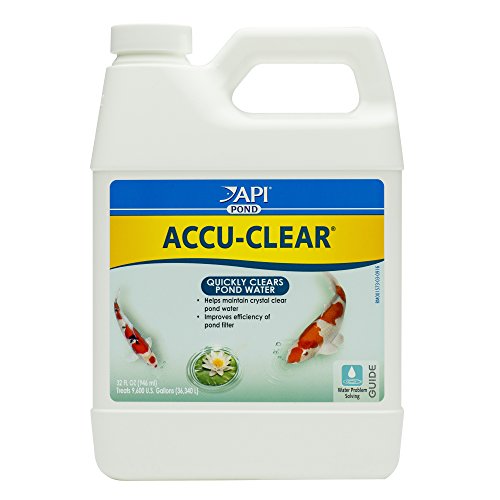
API ACCU-CLEAR Pond Water Clarifier
Flocculant that clumps fine suspended particles so the filter clears cloudy water faster.
First, diagnose the cloudiness
Clear water starts with knowing what is making it dirty, because the fixes differ.
- Green, pea-soup water is microscopic floating algae. The fix is UV plus nutrient control. See green pond water.
- Hazy gray or white cloudiness is usually a bacterial bloom in a new pond or stirred-up debris. The fix is patience, filtration, and water changes. See cloudy pond water.
- Long, hair-like green strands on rocks and waterfalls are string algae, a separate problem UV does not touch. See the string algae problem.
Step 1: Get mechanical filtration right
Mechanical filtration is the foundation. It traps the solid waste, debris, and clumped algae that cloud water so you can rinse them out. None of the later steps work well over a weak or undersized filter. Make sure your filter is sized to your real gallons and koi load (see how to choose a pond filter), and that your pump turns the whole pond over at least once per hour; size it with the pond pump calculator. Rinse mechanical media in pond water every week or two so it never clogs and stops trapping solids.
Step 2: Add UV for green water
If the water is green, a UV clarifier is the single most effective tool you can add. Filter media cannot catch algae that small, but a UV bulb scrambles the cells so they clump together, and then your mechanical filter finally traps them. The key is correct sizing and full flow through the unit.
- Size to roughly 10 watts per 1,000 gallons. Underpowered UV barely dents a bloom. Get the exact wattage from the UV clarifier calculator.
- Run all the water through it. Plumb the UV so the full pond volume passes the bulb; bypassed water stays green.
- Replace the bulb yearly. UV output fades long before the bulb stops glowing, so swap it each season.
Expect a green pond to clear within a few days to about two weeks. For the deeper why, read green pond water explained.
Step 3: Build up beneficial bacteria
UV kills the symptom; bacteria remove the food. Beneficial bacteria break down the organic waste and excess nutrients that feed algae in the first place, so the bloom has less to live on. Dose them regularly, especially after cleaning the filter or doing a water change, to keep the colony strong. This is the same colony that keeps ammonia and nitrite at zero, so feeding it pays off twice. Learn how to keep it thriving in beneficial bacteria in ponds.
Step 4: Plant the pond
Plants are nature's nutrient sponge. Lilies and floaters shade the surface and block the light algae need, while marginals, floaters, and oxygenators pull dissolved nitrate and phosphate straight out of the water, starving algae of fuel. Aim for about 50 to 60 percent surface coverage in summer. A well-planted pond fights green water around the clock with no power bill. See the full planting plan in our pond plants guide.
Step 5: Feed less and stock sensibly
Overfeeding and overstocking are the hidden engines behind most cloudy ponds. Uneaten food rots into the exact nutrients algae crave, and too many fish overwhelm the filter with waste.
- Feed to a 5-minute finish and remove anything left over.
- Stop feeding below about 50F, when koi cannot digest it.
- Respect capacity. Koi are heavy-waste fish needing about 1,000 gallons or more; check yourself with the koi stocking calculator.
Step 6: Keep up water changes
Regular partial water changes dilute the dissolved nutrients and nitrate that algae feed on, which no filter removes. A weekly 10 to 20 percent change, always dechlorinated, keeps the nutrient load low so blooms cannot get a foothold. A clarifier like a flocculant can speed up clearing cloudy water by clumping fine particles for the filter, but it works best as a helper on top of water changes, not a substitute. See pond water changes for the routine.
Fixing string algae
String algae, or blanketweed, is the long green hair that clings to rocks and waterfalls. UV does nothing to it because it is anchored, not floating. Beat it with a combined approach.
| Tactic | How it helps |
|---|---|
| Manual removal | Twist it out by hand or with a brush to cut the mass back fast |
| Beneficial bacteria | Consume the nutrients string algae needs to regrow |
| More plants | Outcompete the algae for the same nutrients and light |
| Less feeding | Cuts the nutrient input at the source |
| Targeted treatments | Used carefully and dosed to real volume for stubborn cases |
For the full method, read our string algae guide. Always dose any treatment to your true gallons, which you can confirm with the pond volume calculator.
Stacking it all together
Clear water is the payoff of a balanced system: a properly sized filter trapping solids, UV handling green water, bacteria and plants starving algae of nutrients, careful feeding, and steady water changes. Start with the biggest offender for your pond, then layer the rest in. Keep up the routine in our pond maintenance schedule and the water stays gin-clear season after season.
Pond Build & Maintenance Planner
Build planner, stocking planner, water-test log, and seasonal maintenance schedule, in one printable planner that keeps your pond healthy year-round.
Frequently Asked Questions
Why is my pond water green?
Green water comes from a bloom of microscopic single-celled algae floating in the water, fed by sunlight and excess nutrients from fish waste and uneaten food. Filter media cannot trap algae this small, which is why a green pond stays green despite a running filter. The reliable fix is a correctly sized UV clarifier, which clumps the algae so your mechanical filter can finally catch them.
How does a UV clarifier clear green water?
Water passes a UV bulb that scrambles the algae cells so they stick together into clumps. Those clumps are now large enough for your mechanical filter to trap and remove. Size the UV to roughly 10 watts per 1,000 gallons and make sure all the pond water passes through it. Used correctly, a UV clarifier clears a green pond within a few days to about two weeks.
What is the difference between green water and string algae?
Green water is free-floating microscopic algae that tints the whole pond like pea soup, and UV clears it. String algae, also called blanketweed, is the long, hair-like green growth that clings to rocks and waterfalls; UV does not touch it because it is not floating. String algae is managed by manual removal, beneficial bacteria, nutrient control, and sometimes targeted treatments rather than UV.
Will beneficial bacteria clear my pond?
Beneficial bacteria help by breaking down the organic waste and excess nutrients that feed algae, which removes the food source over time. They are part of the long-term fix rather than an instant one. Bacteria work best alongside good filtration, plants, and disciplined feeding. Dose them regularly, especially after cleaning or water changes, to keep the colony strong and the nutrient load low.
How long does it take to get clear pond water?
With a correctly sized UV clarifier, green water usually clears within a few days to about two weeks. Cloudy water from new pond bacteria blooms or stirred-up debris often settles in one to two weeks as the cycle matures. Persistent cloudiness or string algae can take longer because you are addressing nutrients and filtration, not just zapping floating algae. Consistency beats quick fixes.
Can too many fish cause cloudy pond water?
Yes. Overstocking is a leading cause of cloudy and green water because more fish mean more waste, more ammonia, and more nutrients for algae. Koi are heavy-waste fish that need about 1,000 gallons or more, so a crowded pond overwhelms the filter and feeds blooms. Check your numbers against your volume, and if you are over capacity, rehome fish or upgrade filtration and aeration.
Planning or running a pond?
Use our free calculators and guides to get every number right.
Pond Planner: $39